The Hour Before the Session Starts

The hour before an open is easy to fill badly. There is information everywhere, none of it demands attention in any particular order, and reading more of it feels productive. By the time the session starts, a person who spent that hour consuming commentary is in a worse position than one who spent it doing three specific things, because the first has acquired opinions and the second has acquired constraints.
Establish What Kind of Day It Is

The first task is factual and takes very little time. Is there a scheduled release, and when. Is the session shortened, is it a holiday elsewhere that will thin participation, is there an expiry or a roll. These are knowable in advance and they change what the opening period will look like.
What this step produces is not a forecast. It produces a category, and the category determines whether the ordinary rules apply. A release landing shortly after the open means the range will form around a repricing event rather than around an auction, and knowing that at eight o'clock is worth considerably more than noticing it at ten past.
The temptation is to go further and form a view about what the release will mean. That is the point at which preparation turns into prediction, and prediction is not what a breakout approach is for.
Establish What Normal Looks Like Today
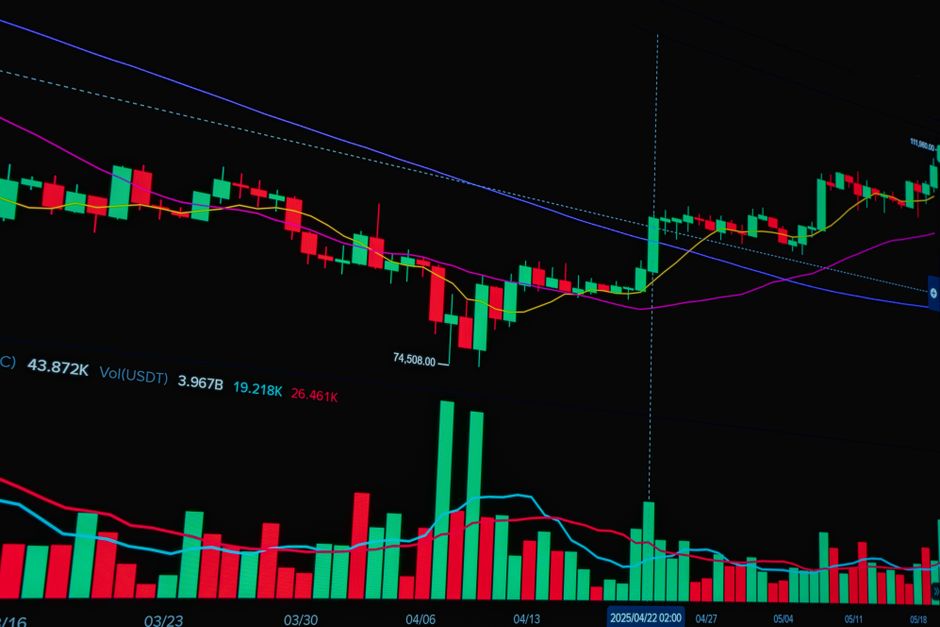
The second task is calibration. Every judgement about the range that will form later is a comparison against something, and that something has to be in mind before the comparison is needed. How tall has the opening range been over recent sessions, and how much does the instrument typically travel in a day at the moment.
This does not require precision or calculation. It requires having looked, recently enough that when a range completes you can say whether it is ordinary, tall or unusually compressed without doing arithmetic under time pressure. A number you have to work out at the moment of decision is a number you will not work out.
The reason this belongs in the morning rather than in the moment is that calibration made after seeing the range is not calibration. It is rationalisation, and it will produce whatever answer permits the trade.
Write Down the Conditions
The third task is to state, in writing, what would have to be true for a trade to be taken. The trigger definition, the maximum range height that is acceptable, the stop rule, the cutoff time after which no entry is taken. Most of this is the same every day, which is the point.
Writing it down when it is the same every day feels redundant, and that feeling is the reason it works. The act of stating the conditions before the session establishes them as conditions rather than as preferences, and a preference can be revised in the moment while a written condition has to be visibly broken.
If anything about the day's category requires an adjustment, this is where it gets made, in advance, with a reason attached. An adjustment made at that hour is a decision. The same adjustment made after the range forms is a negotiation.
What Does Not Belong in the Hour
Commentary and other people's views are the obvious exclusion. They arrive as narratives, narratives are persuasive, and a persuasive narrative about direction is precisely the thing a breakout rule is designed to make unnecessary. There is nothing to be gained from starting the session already leaning.
Reviewing yesterday's trades also does not belong here, though it feels adjacent. Yesterday's outcome has no bearing on today's setup, and reading it shortly before the open imports an emotional state into a period that should be procedural. Reviews belong to the other end of the day.
Adjusting the strategy does not belong here either. An hour before the open, under mild time pressure, is the worst available moment to change a rule, and a change made then is almost always a response to the most recent loss rather than to anything considered.
The Order Matters
Categorise the day, calibrate what normal is, then state the conditions. Done in that order, each step informs the next and the whole thing takes a fraction of the hour, leaving the rest genuinely free.
Done in a different order, or done as a general survey of everything available, the same time produces a head full of context and no constraints. The value of the preparation is not in how much was absorbed. It is in arriving at the open with a small number of things already decided, so that the only work left is to watch and to check.