ORB Trading Routine

The daily routine wrapped around an opening range session. What belongs in the hour before the open, what the hour after going flat is for, and why the habit earns most on the days it feels unnecessary.
The Session Is the Short Part of the Day
An opening range strategy occupies a narrow slice of the clock. The range forms, a decision is made or declined, and the position resolves. Everything else that determines how well that slice goes happens outside it, in the time before the open and the time after the position is closed. That surrounding time is unstructured by default, which means it fills with whatever is nearby, and what is nearby on a given morning is not usually what the next hour requires of you.
A Routine Is a Set of Decisions Made Early
What a routine really does is move decisions to a time when they are cheap. Deciding at eight in the morning that a range above a certain height will be skipped costs nothing, because no range exists yet and nothing is at stake. Deciding the same thing an hour later, with the range drawn and the urge to participate already present, is a different act performed by a person in a different state. The routine is not discipline applied in the moment. It is the arrangement that removes the need for it.
The Part After Is Usually Missing
Most people who build a routine build the front half. The preparation gets attention because it visibly precedes the trade, and the hour after going flat is left to itself. That hour is where the day's record gets written or does not, where a loss either gets processed or gets carried into tomorrow, and where the temptation to take a second trade that no rule asked for arrives. It has more influence over the following week than the preparation does, and it is almost always the part that is skipped.
Consistency Is the Whole Mechanism
A routine performed on the days it feels warranted is not a routine. Its value comes from being identical across sessions, because that is what makes an unusual day recognisable as unusual. If the preparation varies with how you feel, the days where you shortened it are precisely the days where the shortening mattered, and there is no way to know that afterwards. The same steps in the same order, including on the quiet days when they seem pointless, is the entire point of the arrangement.
The Shape of the Day
The articles here deal with the time around the session rather than the session itself. What belongs in the hour before the open and what does not, what the hour after going flat is for, and why the routine earns most of its keep on the days when performing it feels like a formality. Questions of how to read a range, where to enter and where to place a stop are separate subjects and are not treated here.
Latest Guides
Routine Matters Most on the Days It Feels Pointless
Some mornings the preparation is obviously worth doing. There is a release scheduled, the overnight session moved, something needs deciding. Most mornings are not like that. Nothing is happening, the checklist produces the same answers it produced yesterday, and going through it feels like an administrative gesture. Those are the mornings that decide whether the routine still exists in three months.
Normal Is Something You Have to Measure

The clearest argument is also the least intuitive. A routine performed only on the days that seem to warrant it cannot tell you that a day is unusual, because unusual is defined against the days you skipped.
Calibrating the typical opening range height works only if it has been done repeatedly on ordinary sessions. Noting your own state before a trade is informative only if there is a run of ordinary entries to compare against. Every quiet, uneventful morning contributes a data point that gives the eventful ones their meaning. Skipping the quiet ones is skipping the denominator.
This applies to the log with particular force. A record kept on interesting days is a record of interesting days, and it will suggest that trading consists mostly of drama. The boring entries are what make a run of losses recognisable as a run rather than as a catastrophe.
Judging Whether Today Warrants It Is the Problem

The second argument is about who is making the assessment. Deciding that a particular morning does not need the full routine is a judgement, and it is being made by the person whose judgement the routine exists to constrain.
The days that feel like they do not need preparation are not randomly distributed. They cluster around confidence after a good run, around fatigue, around distraction, around the belief that you already know what the market is doing. Each of those is a state in which a shortcut is more attractive and less advisable, which means the skipping is correlated with the risk in exactly the wrong direction.
A routine that is only performed when it feels necessary has handed the decision back to the faculty it was supposed to replace, and it has done so silently.
How It Actually Erodes
Nobody abandons a routine. It thins. One step gets dropped on a morning when it seems redundant, and nothing bad happens, which is read as evidence that the step was unnecessary. The following week two steps go the same way.
The absence of consequence is the trap. A single skipped preparation on a quiet day genuinely does not cause a loss, and the reinforcement is real and immediate. The cost is diffuse and it appears much later, on a day that needed the step, by which time the connection to a decision made weeks earlier is invisible.
This is why erosion is best caught by watching the routine itself rather than by watching outcomes. Whether the checklist was completed is checkable at the end of each day, and the answer is available immediately, unlike whether it helped.
Keep It Small Enough to Survive Boredom
Given all of that, the design consequence is that the routine has to be short. A long routine is sustainable while it feels important and gets cut the moment it does not, which means the elaborate version reliably becomes no version at all.
A few steps that take a handful of minutes will still be done on a dull Wednesday in the middle of a flat month. That is the only test that matters, and it should be applied when the routine is being designed rather than discovered later. If a step would not be performed on the least motivated morning of the year, it is not part of the routine, whatever value it might have had.
Fixed order helps for the same reason. A sequence performed identically becomes something close to automatic, and automatic survives low motivation in a way that deliberate effort does not.
The Quiet Days Are the Practice
There is one more thing the uneventful sessions provide, and it is not measurement. They are where the sequence gets rehearsed under no pressure, so that on a day with a release landing and a range behaving strangely, the checking happens without having to be summoned.
A procedure you have run a hundred times when it did not matter is a procedure you can run when it does. One that only appears on difficult days is being attempted for the first time, every time, under exactly the conditions that make it hardest. The pointless mornings are not the cost of the routine. They are where it is built.

The Hour After You Are Flat
The position closes and the structured part of the day ends abruptly. There is no next step waiting, the screens are still showing a market that is still moving, and whatever happened is still fresh enough to be felt rather than considered. Almost nobody plans this hour, and it has a larger effect on the following week than the preparation that got so much attention beforehand.
The First Thing Is Not to Trade

The most common damage done in this hour is a second trade that no rule asked for. After a loss it arrives as recovery, and after a win it arrives as momentum, and in both cases it is a position taken because the day felt unfinished rather than because a condition was met.
The defence is structural. If the plan written that morning specified one trade, then the session is over when that trade closes, and being over is a state with an action attached: the platform gets closed, or at minimum the orders get cleared and the instrument gets taken off the screen. Willpower applied to a live chart is a much weaker mechanism than simply not looking at one.
This is worth being firm about because the unplanned second trade is the one least likely to appear in any review. It gets remembered as part of the day rather than as a departure from the rules, and it quietly changes what the system is.
Write the Record While It Is Still True

The log entry belongs in the first part of this hour and not later. What the range looked like, what triggered, what you did, how it ended relative to the plan. Written within a few minutes, these are observations. Written at the end of the day, they are recollections, and recollection has already begun adjusting itself towards the outcome.
The entry should be short enough that it happens on the bad days too. A log that gets completed after wins and skipped after losses produces a record that is worse than no record, since it looks like data and is systematically selected.
Deliberately, this is recording and not analysis. Deciding what a trade means, whether the rule needs adjustment, whether the day revealed something, all of that requires distance that does not exist within minutes of being flat. Write what happened and stop.
Let the Result Finish Arriving
There is a period after any decisive outcome where the feeling is still resolving, and decisions made inside it are made by someone who will not agree with them tomorrow. A loss produces an urge to change something. A win produces an urge to increase something. Both urges are strongest immediately and both fade.
The practical rule is that no change to the strategy, the size or the schedule gets made on the same day as the trade that prompted it. If the change is a good idea, it will still be a good idea on the weekend, when it can be considered against the whole record rather than against the most recent example.
Doing something physical helps, and the reason is not mystical. Leaving the desk breaks the association between the screen and the feeling, which is what allows the feeling to finish. Sitting in the same chair watching the same instrument keeps it running.
Close the Day Explicitly
An hour that ends by drifting into other work leaves the session ambiguously open, and an ambiguously open session gets returned to. It is worth having a small, definite action that marks the end: the log saved, the platform closed, a line drawn under it.
The specific action does not matter. Its definiteness does. A day that has been closed can be left alone, and a day that was merely abandoned tends to be picked up again in the evening, usually to look at what the instrument did after you exited, which is information that cannot help and can easily hurt.
What Belongs to the Weekend Instead
Almost all of the thinking people try to do in this hour belongs elsewhere. Whether the rules are working, whether the range setting suits the instrument, whether the recent run of losses is ordinary or a signal, all of these need a sample and a calm reader, and the hour after a trade supplies neither.
Keeping that boundary is what makes the hour after manageable. It has three jobs: do not take another position, write down what happened, and end the day on purpose. Everything else can wait, and waiting will improve it.

The Hour Before the Session Starts
The hour before an open is easy to fill badly. There is information everywhere, none of it demands attention in any particular order, and reading more of it feels productive. By the time the session starts, a person who spent that hour consuming commentary is in a worse position than one who spent it doing three specific things, because the first has acquired opinions and the second has acquired constraints.
Establish What Kind of Day It Is

The first task is factual and takes very little time. Is there a scheduled release, and when. Is the session shortened, is it a holiday elsewhere that will thin participation, is there an expiry or a roll. These are knowable in advance and they change what the opening period will look like.
What this step produces is not a forecast. It produces a category, and the category determines whether the ordinary rules apply. A release landing shortly after the open means the range will form around a repricing event rather than around an auction, and knowing that at eight o'clock is worth considerably more than noticing it at ten past.
The temptation is to go further and form a view about what the release will mean. That is the point at which preparation turns into prediction, and prediction is not what a breakout approach is for.
Establish What Normal Looks Like Today
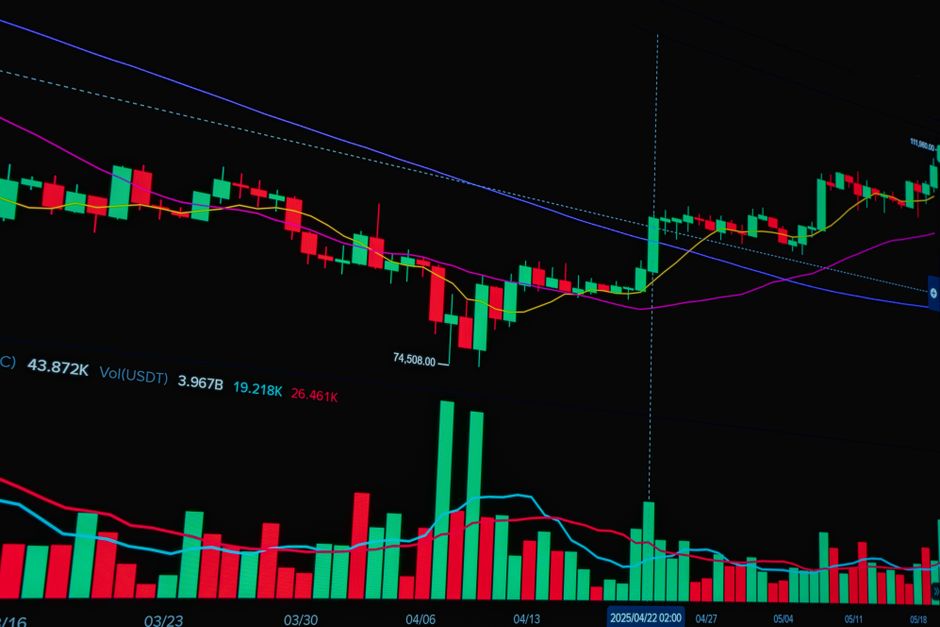
The second task is calibration. Every judgement about the range that will form later is a comparison against something, and that something has to be in mind before the comparison is needed. How tall has the opening range been over recent sessions, and how much does the instrument typically travel in a day at the moment.
This does not require precision or calculation. It requires having looked, recently enough that when a range completes you can say whether it is ordinary, tall or unusually compressed without doing arithmetic under time pressure. A number you have to work out at the moment of decision is a number you will not work out.
The reason this belongs in the morning rather than in the moment is that calibration made after seeing the range is not calibration. It is rationalisation, and it will produce whatever answer permits the trade.
Write Down the Conditions
The third task is to state, in writing, what would have to be true for a trade to be taken. The trigger definition, the maximum range height that is acceptable, the stop rule, the cutoff time after which no entry is taken. Most of this is the same every day, which is the point.
Writing it down when it is the same every day feels redundant, and that feeling is the reason it works. The act of stating the conditions before the session establishes them as conditions rather than as preferences, and a preference can be revised in the moment while a written condition has to be visibly broken.
If anything about the day's category requires an adjustment, this is where it gets made, in advance, with a reason attached. An adjustment made at that hour is a decision. The same adjustment made after the range forms is a negotiation.
What Does Not Belong in the Hour
Commentary and other people's views are the obvious exclusion. They arrive as narratives, narratives are persuasive, and a persuasive narrative about direction is precisely the thing a breakout rule is designed to make unnecessary. There is nothing to be gained from starting the session already leaning.
Reviewing yesterday's trades also does not belong here, though it feels adjacent. Yesterday's outcome has no bearing on today's setup, and reading it shortly before the open imports an emotional state into a period that should be procedural. Reviews belong to the other end of the day.
Adjusting the strategy does not belong here either. An hour before the open, under mild time pressure, is the worst available moment to change a rule, and a change made then is almost always a response to the most recent loss rather than to anything considered.
The Order Matters
Categorise the day, calibrate what normal is, then state the conditions. Done in that order, each step informs the next and the whole thing takes a fraction of the hour, leaving the rest genuinely free.
Done in a different order, or done as a general survey of everything available, the same time produces a head full of context and no constraints. The value of the preparation is not in how much was absorbed. It is in arriving at the open with a small number of things already decided, so that the only work left is to watch and to check.